Brian Du
Case study 02 2019 — 2024

Seedwell

A fintech company behind two related financial products: Seedwell, an employer-sponsored financial wellness and automated banking platform, and LegacyAI, a direct-to-consumer extension for individuals outside the employer-benefits channel.

Role
Co-Founder & Head of Engineering
Also
Product, design & front-end lead
Products
Seedwell · LegacyAI
Stack
React, GraphQL, Redux Toolkit
The Seedwell model

One benefit, two sides of the experience
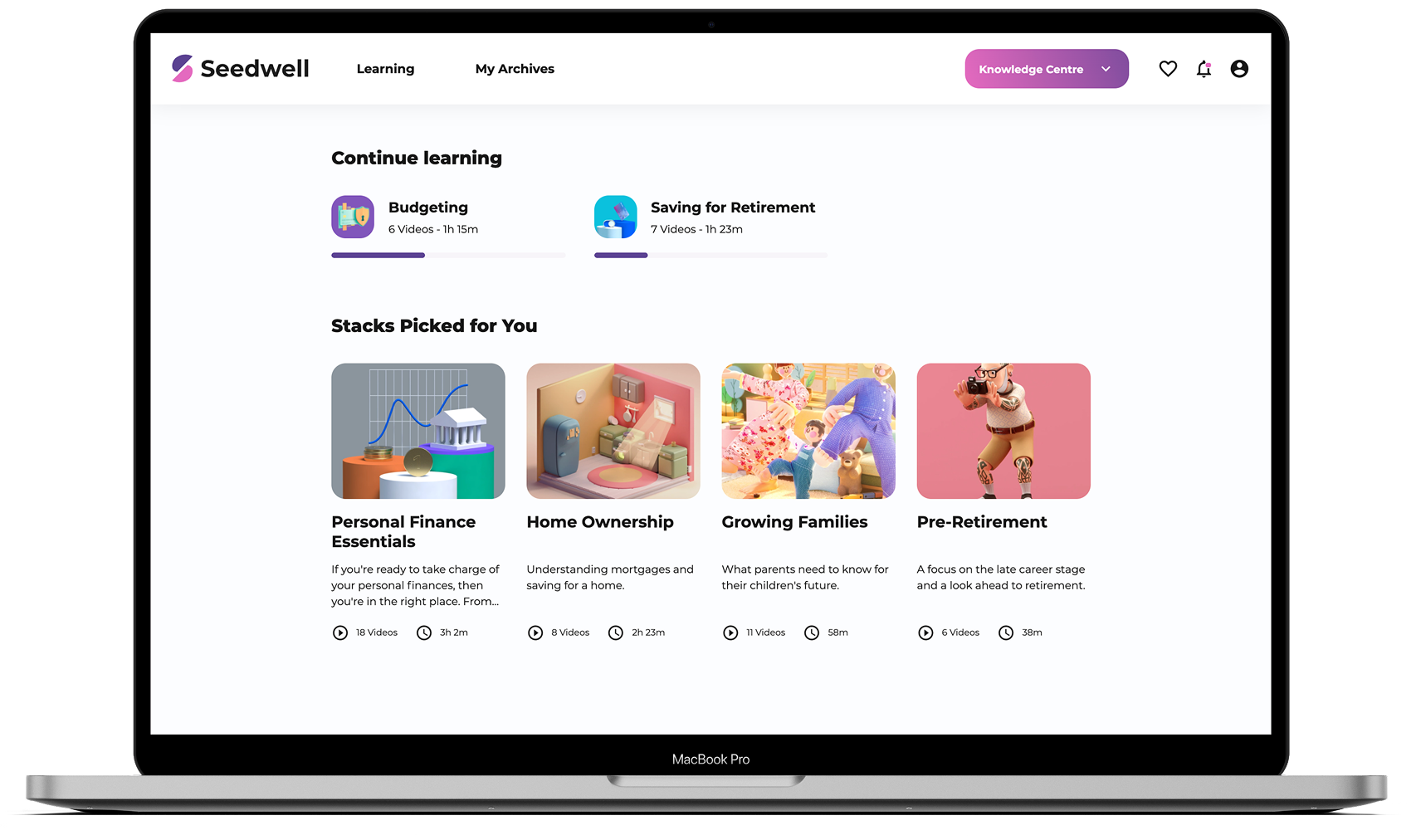
Employers sponsored and administered the benefit through the Financial Wellness Portal, while employees used the Seedwell member app to manage everyday finances and automation.
Seedwell Financial Wellness Portal shown on a MacBook Pro
The employer experience supported adoption and program administration; the member experience had to deliver everyday value to employees.
Seedwell member app home screen shown on a phone
Two product directions

From an employer benefit to a direct consumer product

Seedwell
Employer-sponsored · B2B2C
Employer / benefits partner Employee
Distributed through employers
Employee receives access as a benefit
Member app is the end-user product experience
Employer portal supports the organizational customer
LegacyAI
Direct-to-consumer · B2C
LegacyAI Individual consumer
Separately branded
Accessed outside the employer-benefits channel
Adapted the underlying financial-management concept for a direct consumer journey
The problem

Financial advice nobody acts on, benefits nobody uses

Employers were buying financial wellness as education: webinars, articles, a portal nobody returned to. Employees needed the opposite — money moved before they could spend it, and an account that made saving the default rather than a monthly decision.

That meant designing one system across two audiences: a member app tied to payroll, and an employer portal that made a benefits team confident in the program they had bought. Both sat on compliance-sensitive ground, which shaped the product as much as the design did.

Model
Employer-distributed
Mechanism
Payroll-based automation
Constraint
Neobanking compliance
Team
Founder, me, backend, interns
Approach

Five years of owning the surface people actually touched

01
Company & brand
Co-founded with the CEO and set the visual identity, website, investor decks, sales materials and marketing assets alongside product strategy and roadmap.
02
Member app
Designed and built the financial overview, banking and account management, payroll allocation, budgeting and savings automation.
03
Employer portal
The Financial Wellness Portal: employer-sponsored education, progress tracking, webinars, and the administrative tools behind them.
04
Architecture & team
Led front-end architecture and delivery, managed interns and junior-to-intermediate developers, and worked with backend engineering on integrations and compliance requirements.
The Seedwell member app

Automation, not advice

Seedwell used payroll and connected financial accounts to help members organize everyday money movement. The design challenge was making automation feel understandable, controllable and trustworthy rather than invisible or intimidating.
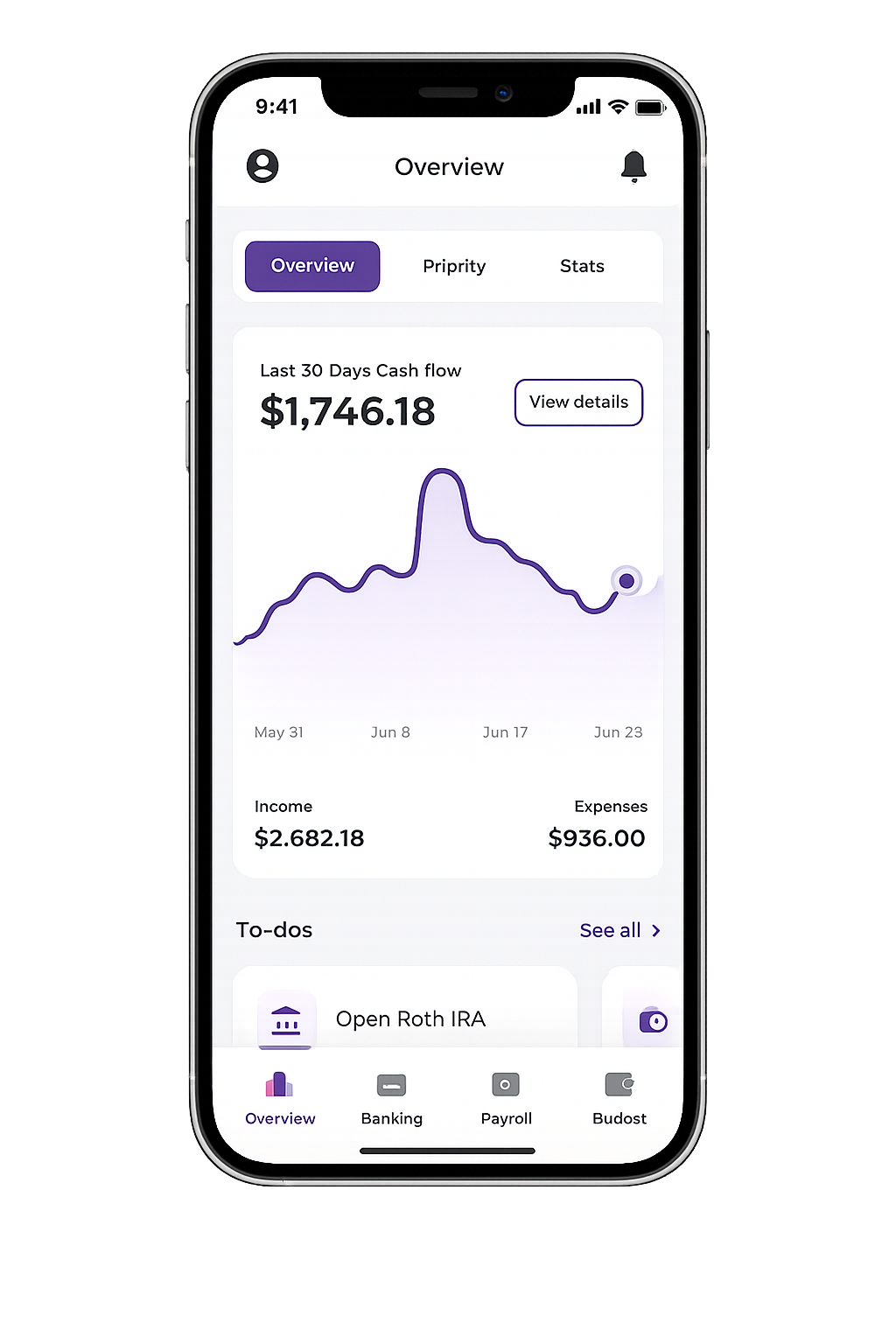
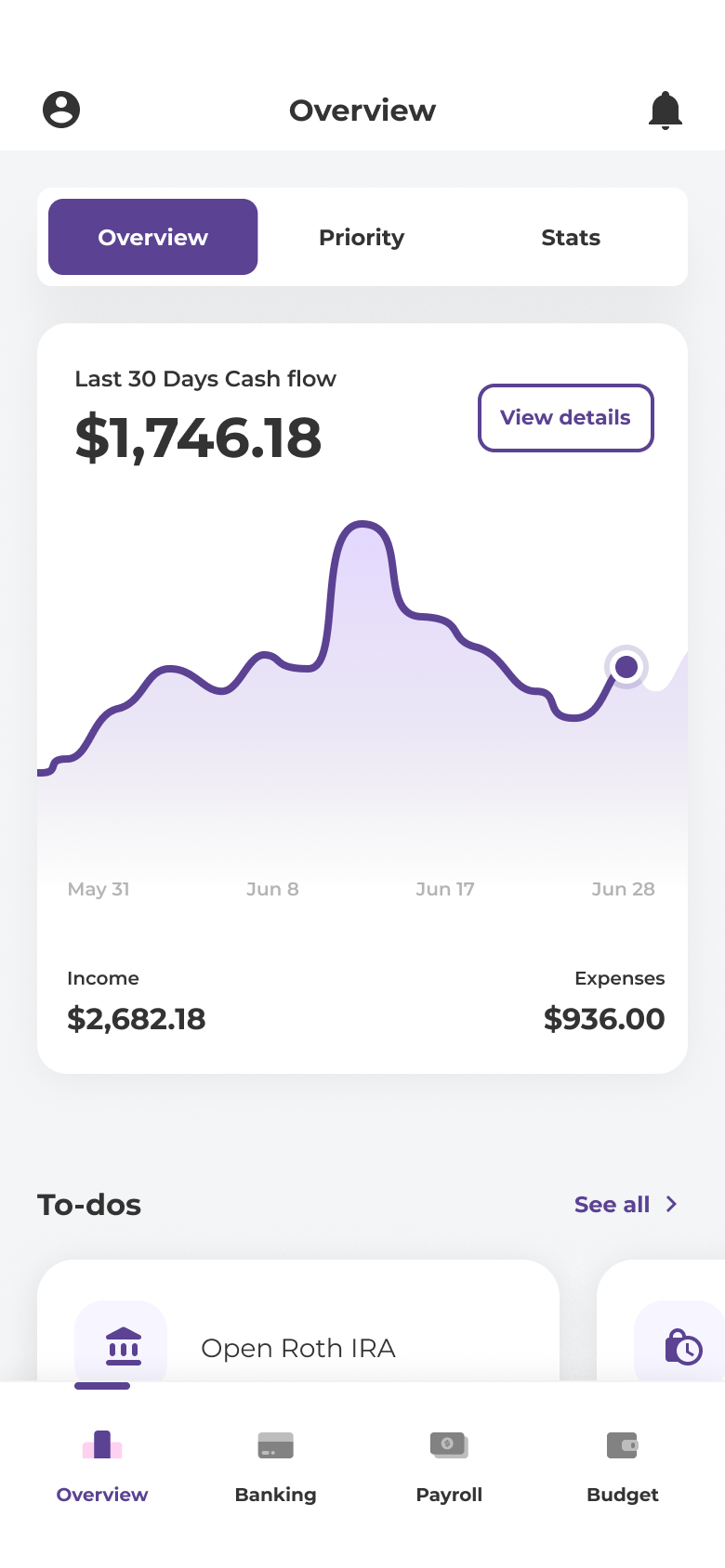
Seedwell member app overview — 30-day cash flow, income, expenses and to-dos
Financial overview — accounts, balances, allocations and progress in one place.
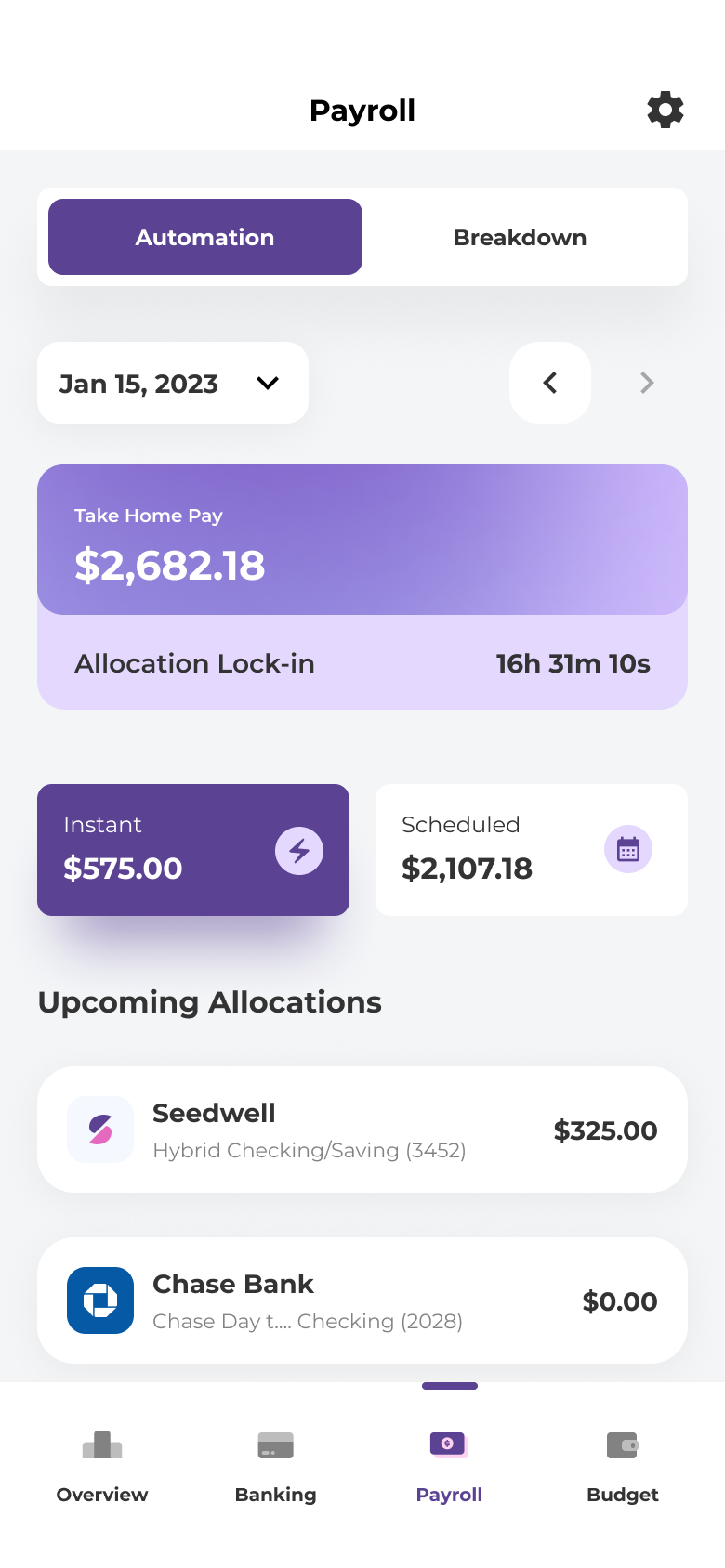
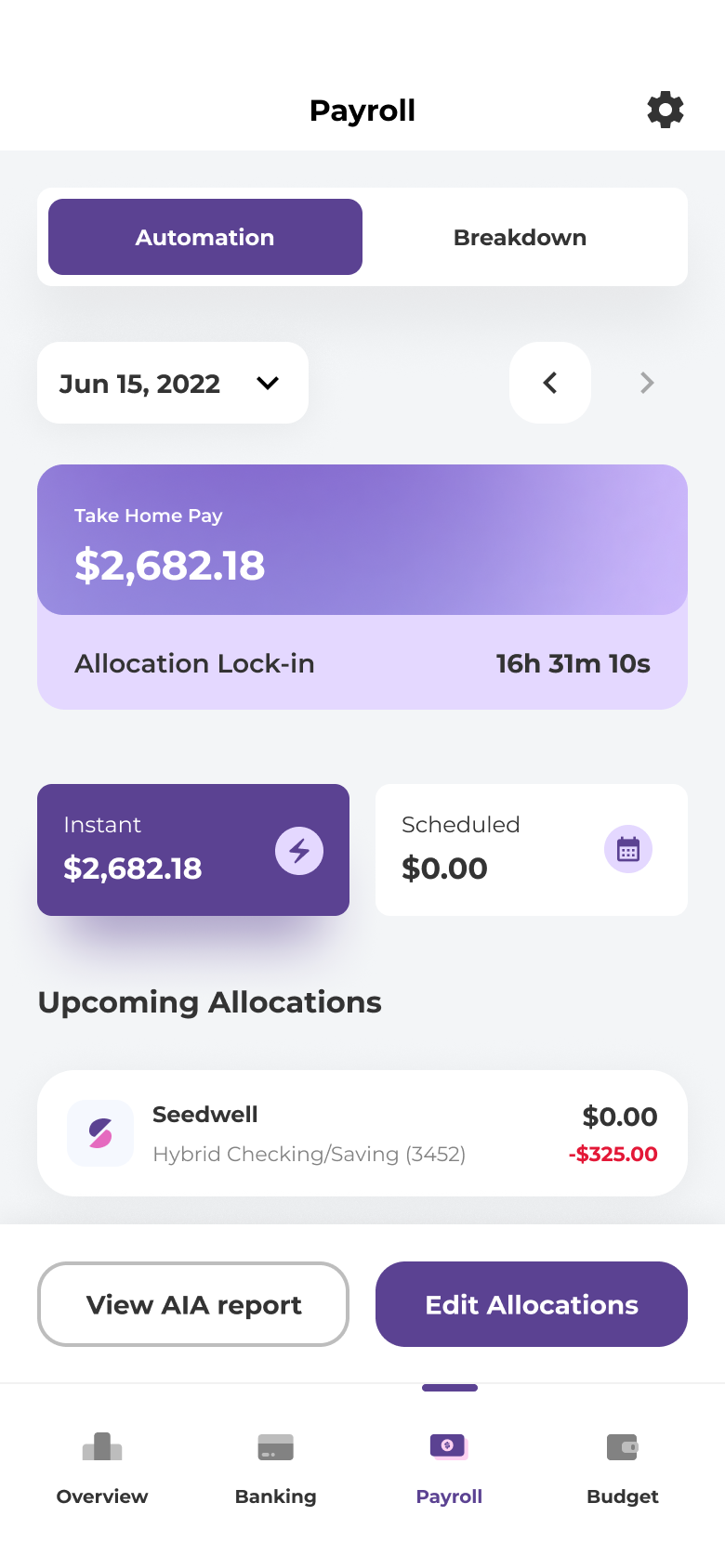
Seedwell payroll automation — take-home pay, allocation lock-in and upcoming allocations
Automated Income Allocation — how incoming money is directed across financial priorities.
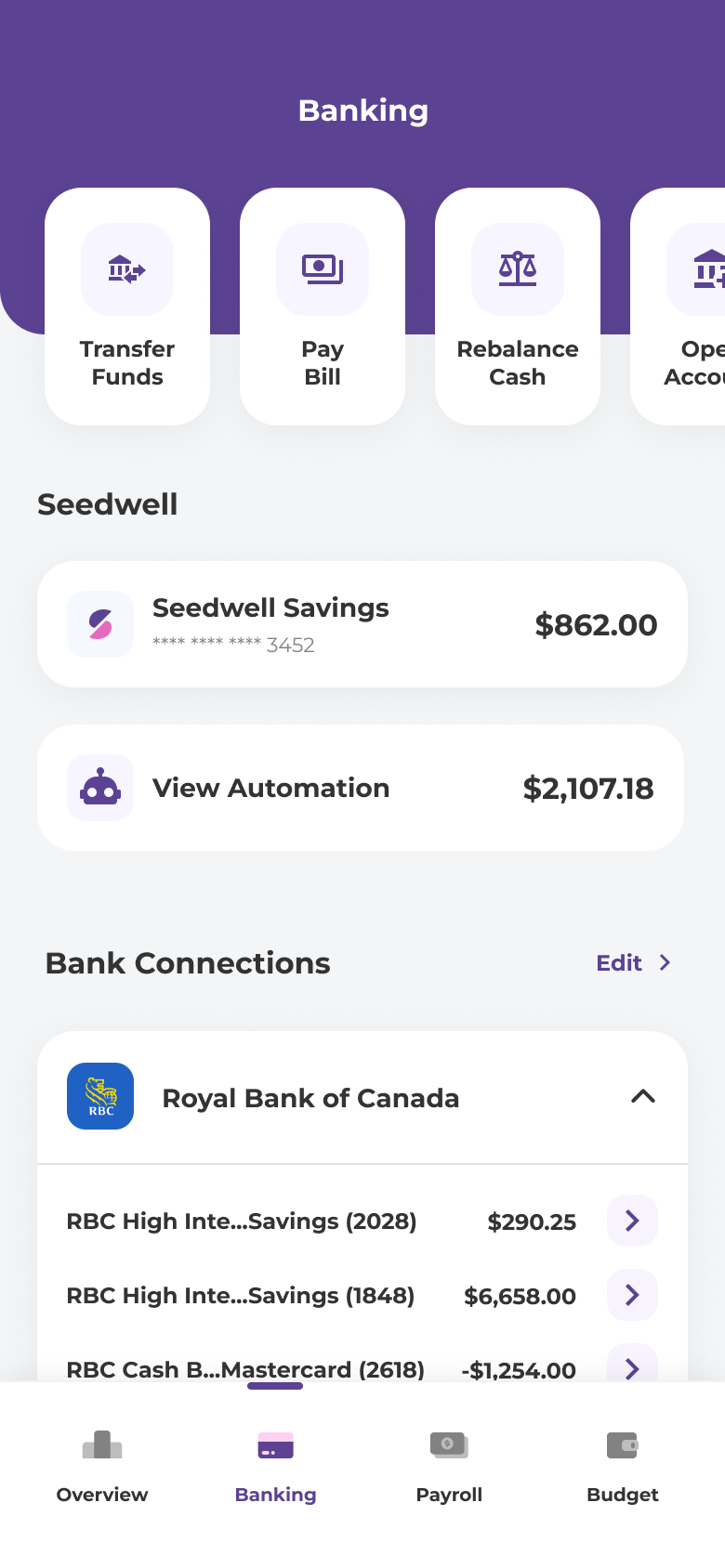
Seedwell banking — transfer, pay bill, rebalance cash and linked bank connections
Banking — transfers, bill payment and connected accounts in one place.
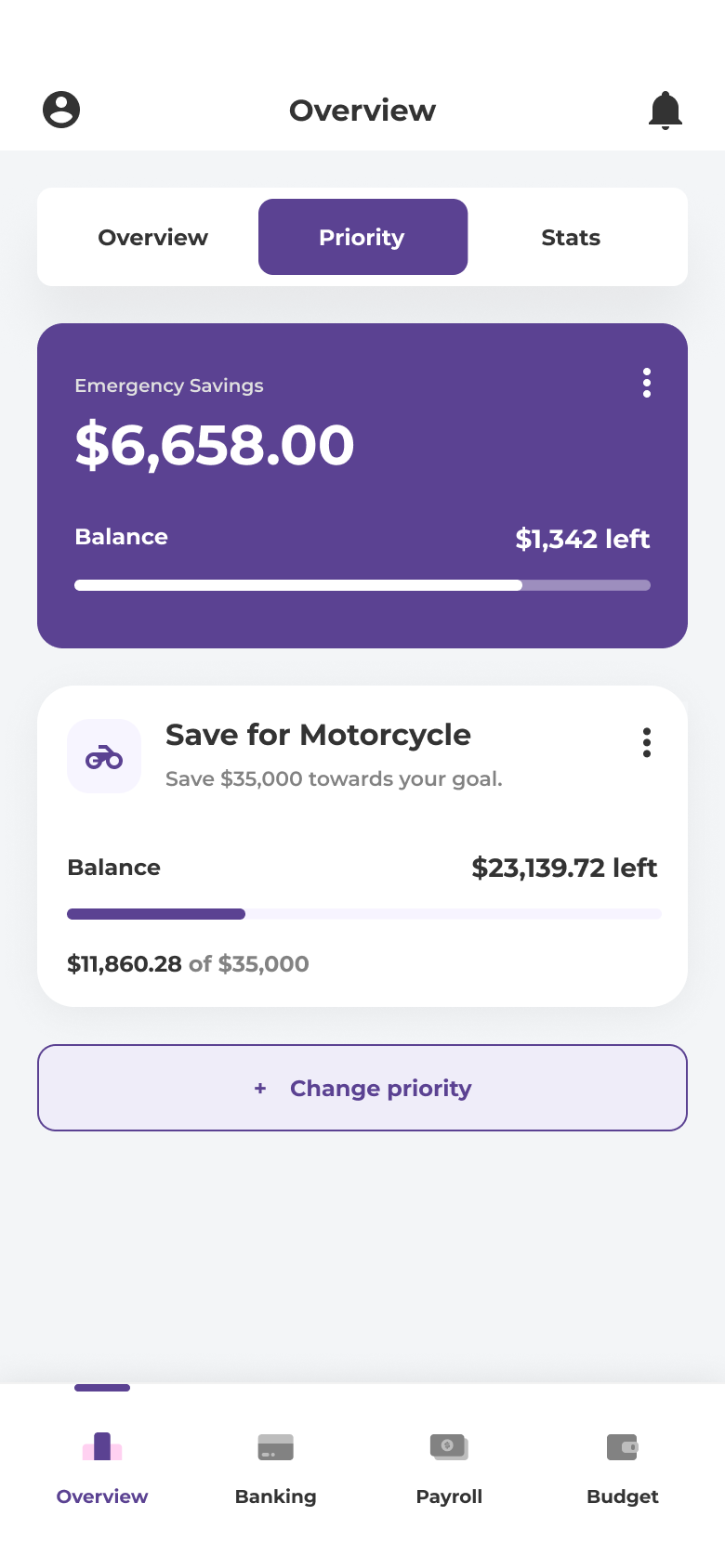
Seedwell priorities — emergency savings and goal progress with reorderable priority
Priorities — goals ordered by importance, with progress against each.
Key workflow

Making automated money movement understandable
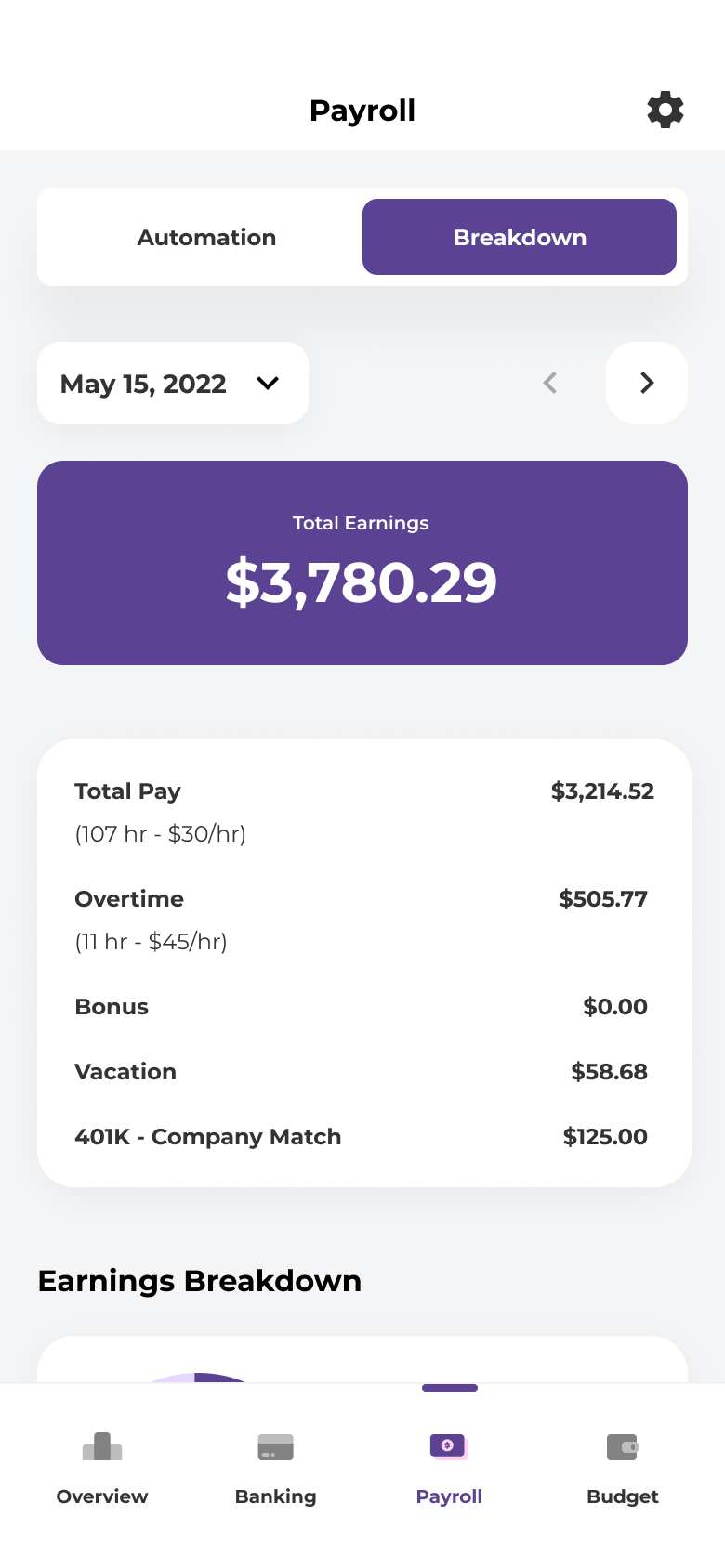
Members needed to see what the automation would do before it ran, change it while there was still time, and check what actually moved afterwards.
01Earnings land
Payroll breakdown — total earnings with hours, overtime, vacation and company match
02A split is proposed
Automation tab — take-home pay split into instant and scheduled with a lock-in countdown
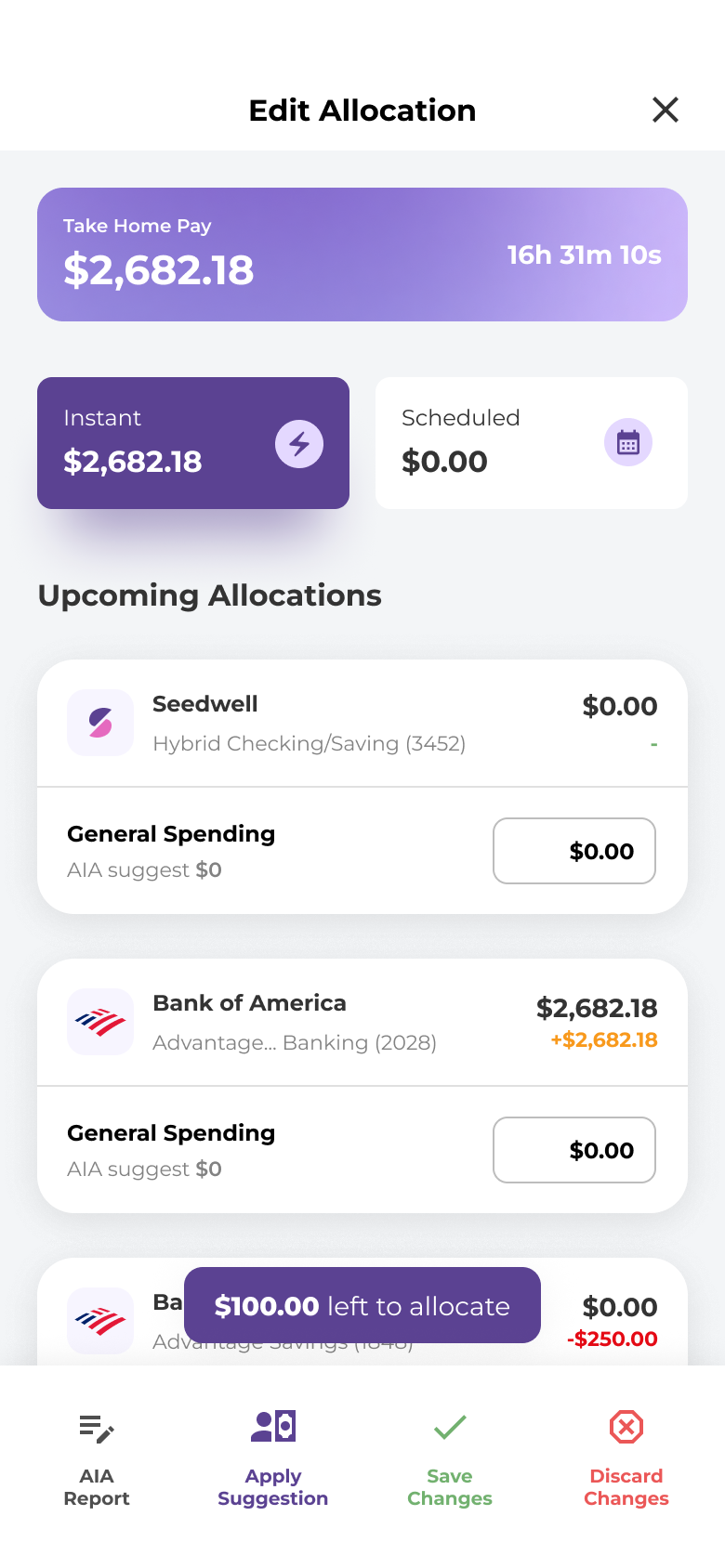
03The member adjusts
Edit allocation — per-account amounts against suggestions, with an amount left to allocate
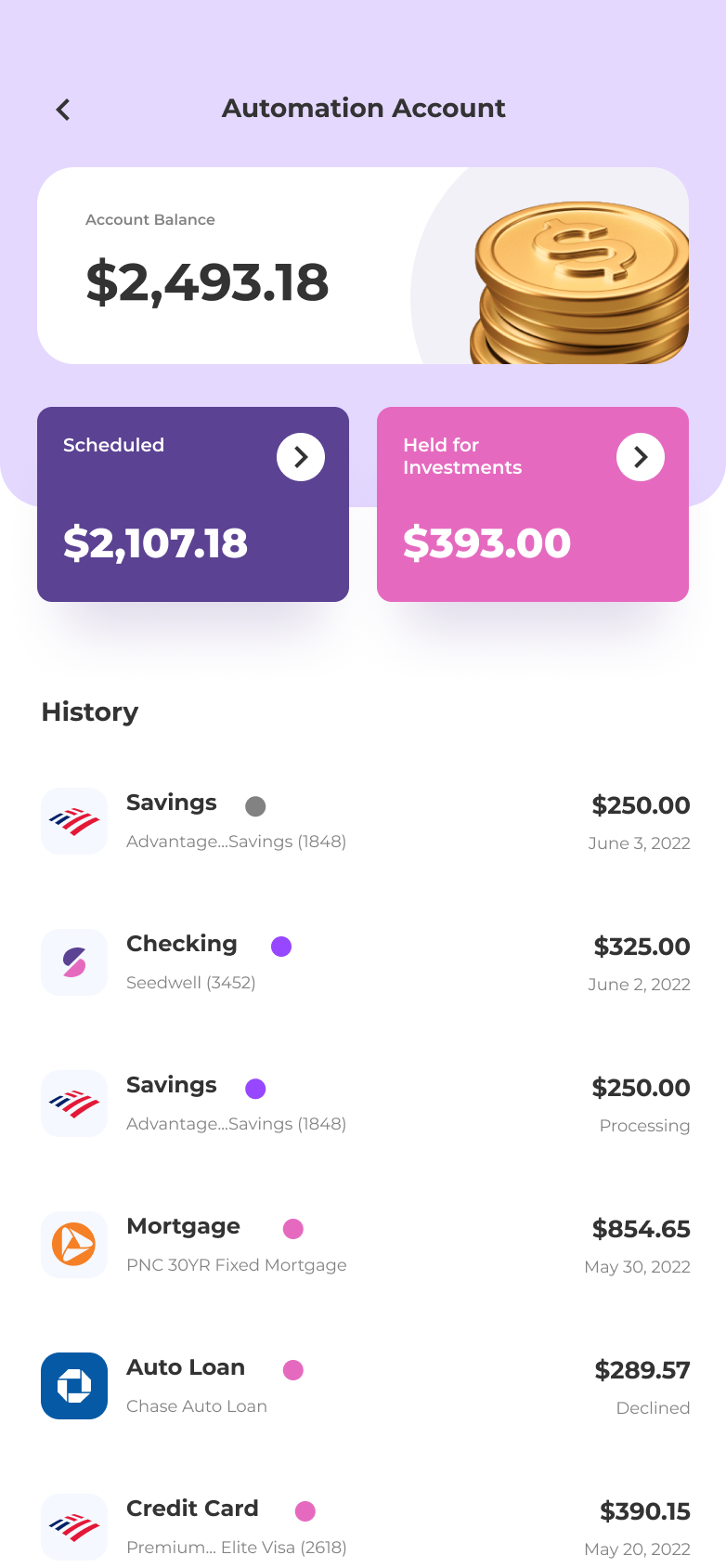
04Money moves, on record
Automation account — balance, scheduled and held amounts, and a history of every transfer
Employer portal

Built for the teams sponsoring the benefit

The Financial Wellness Portal gave benefits teams a way to understand participation, follow program progress and manage the employer side of the Seedwell experience.
Participation & progress — how a benefits team read program uptake and education completion.
Program administration — managing the employer side of the benefit.
Internal operations

The tools behind the experience

A separate internal surface for account administration, onboarding and the operational workflows the product ran on.
Admin dashboard — dense operational data in a readable, workable layout.
Account workflows — onboarding and administration handled by the internal team.
LegacyAI

Taking the model directly to consumers

The Seedwell team later developed LegacyAI as a separately branded B2C extension for people outside the employer-benefits channel. I carried the product, brand and front-end thinking into a direct-to-consumer journey while adapting the experience for users who no longer entered through an employer program.

The product retained financial-management concepts such as account and payroll connections, automated money allocation and goal-based structures, while reframing onboarding, positioning and the overall user journey for direct consumer access.

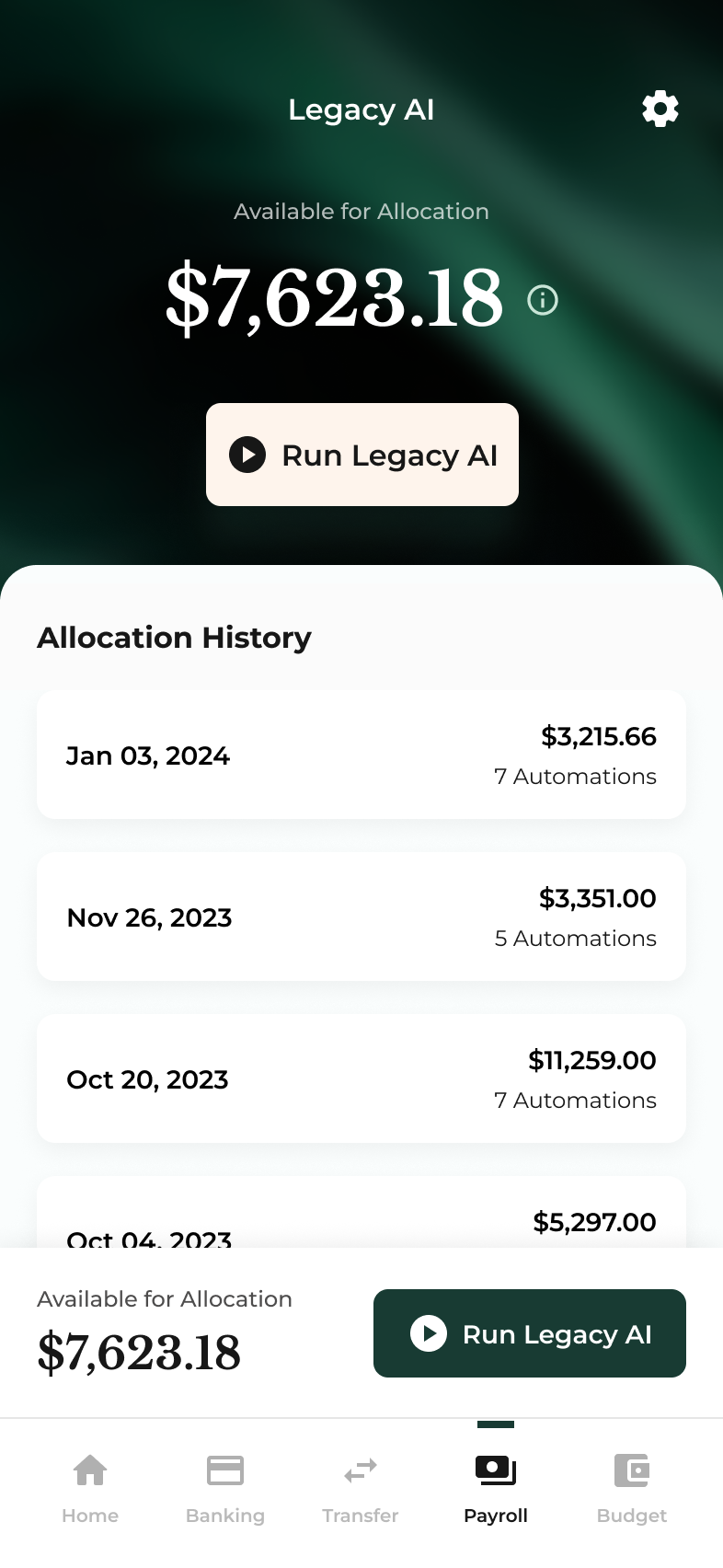
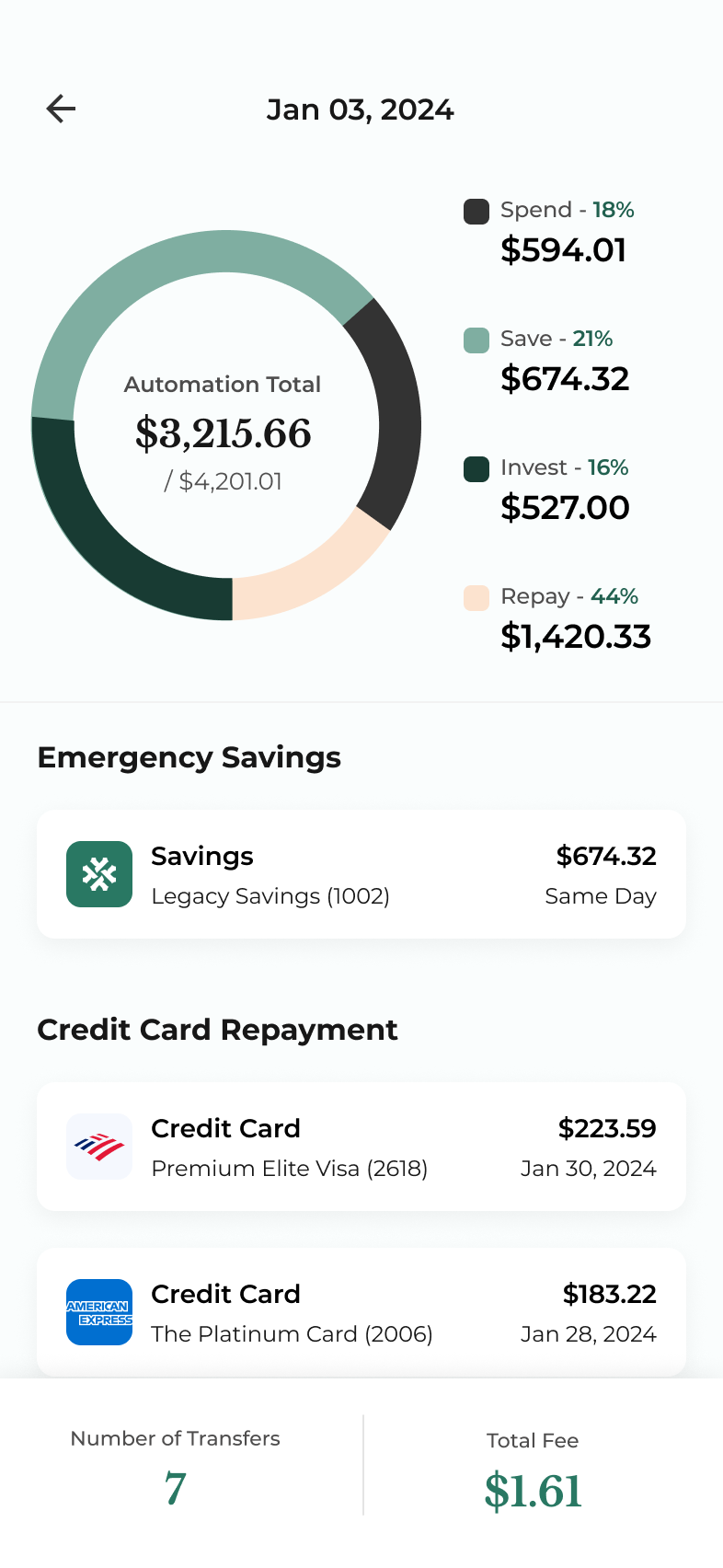
The allocation engine gave the product its name. Rather than asking someone to budget, it reads the available balance against their goals and connected accounts, then proposes a split across spending, saving, investing and debt repayment. One action commits it: the money moves to the right accounts, and each run is recorded so the reasoning stays inspectable rather than opaque.
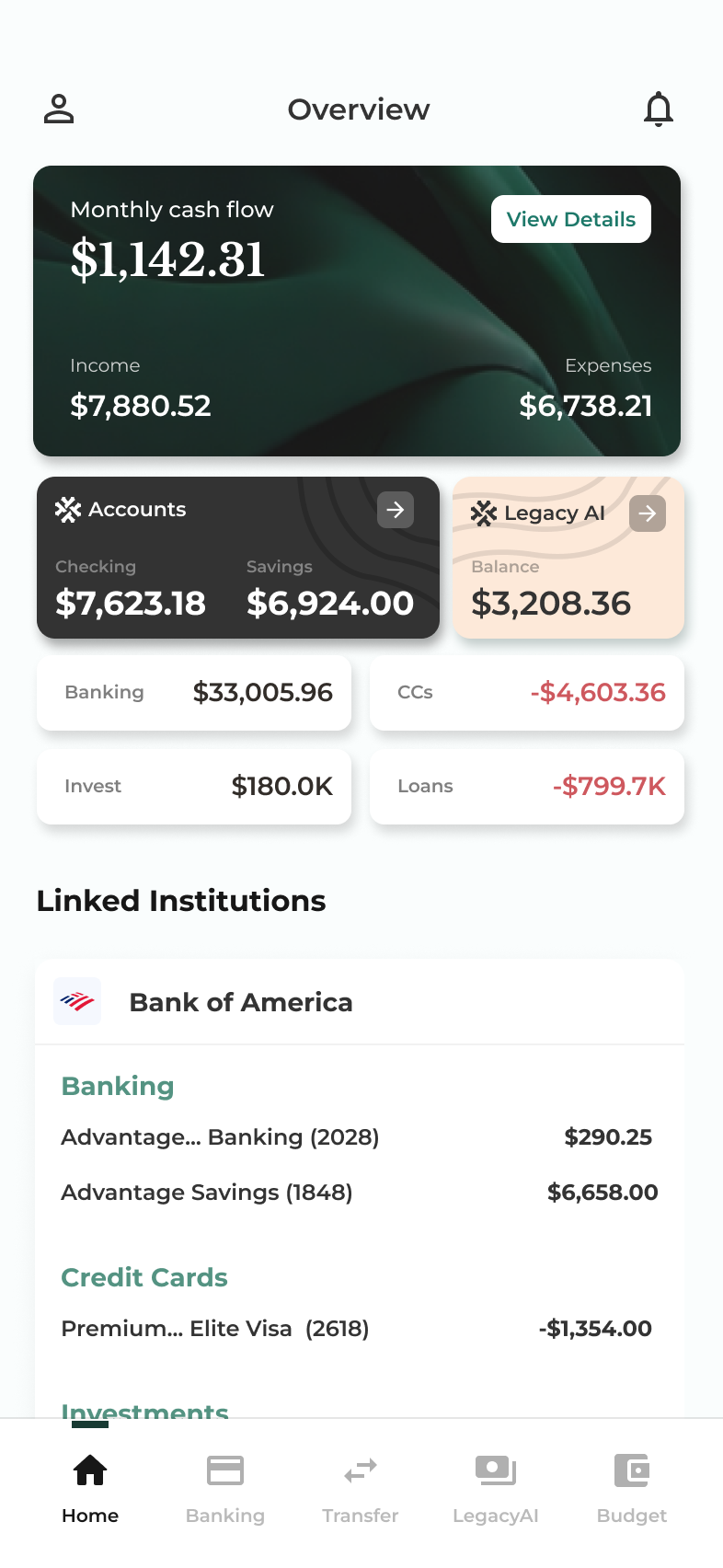
LegacyAI overview screen with monthly cash flow, accounts and linked institutions
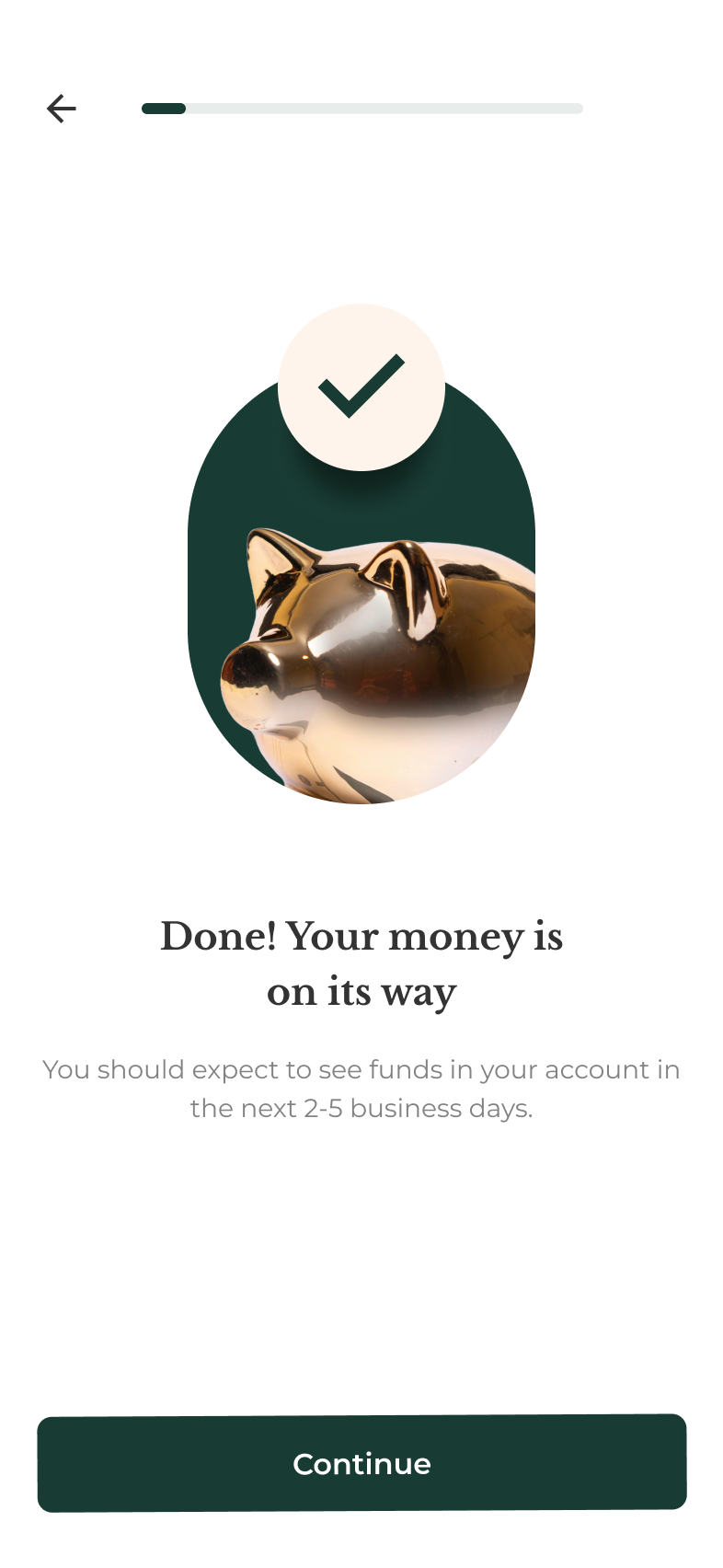
LegacyAI onboarding confirmation screen
Direct onboarding — the user sets up alone, with no employer program to enter through.
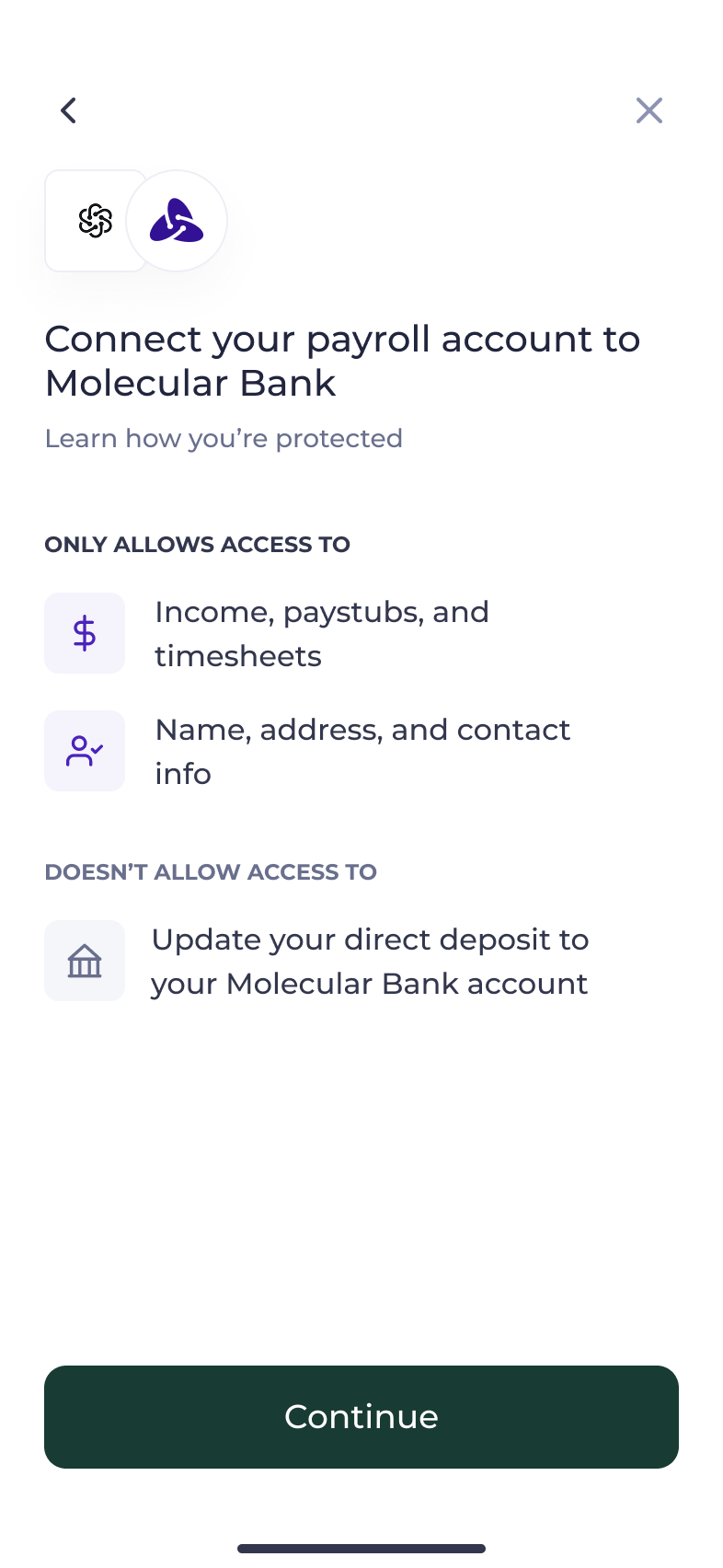
LegacyAI payroll account connection permissions screen
Connections — payroll linked by the user, with permissions stated plainly.
LegacyAI allocation screen with available balance and allocation history
Legacy AI — one action reads the balance and splits it across goals.
LegacyAI allocation breakdown for a single run — spend, save, invest and repay splits with destination accounts
Allocation history — every run opens into its split, destination accounts and fees.
Brand & go-to-market

Product, brand and sales had to speak the same language
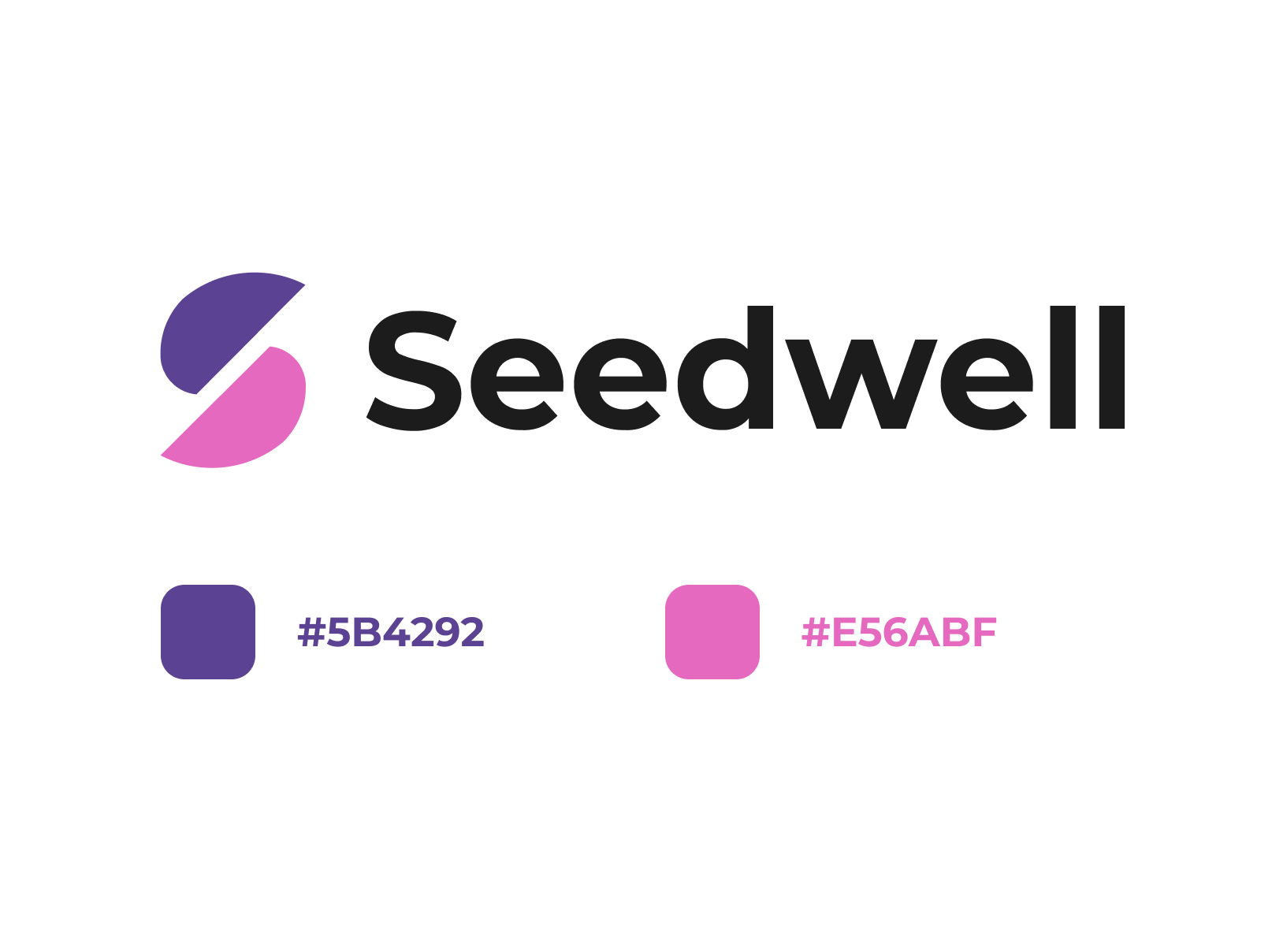
I owned the visual direction across product, company identity, web, investor materials, sales collateral and marketing — keeping the product story consistent from a customer presentation through to the interface itself.
Seedwell logo with the palette: 5B4292 and E56ABF
Identity — the mark and palette that everything else was built on.
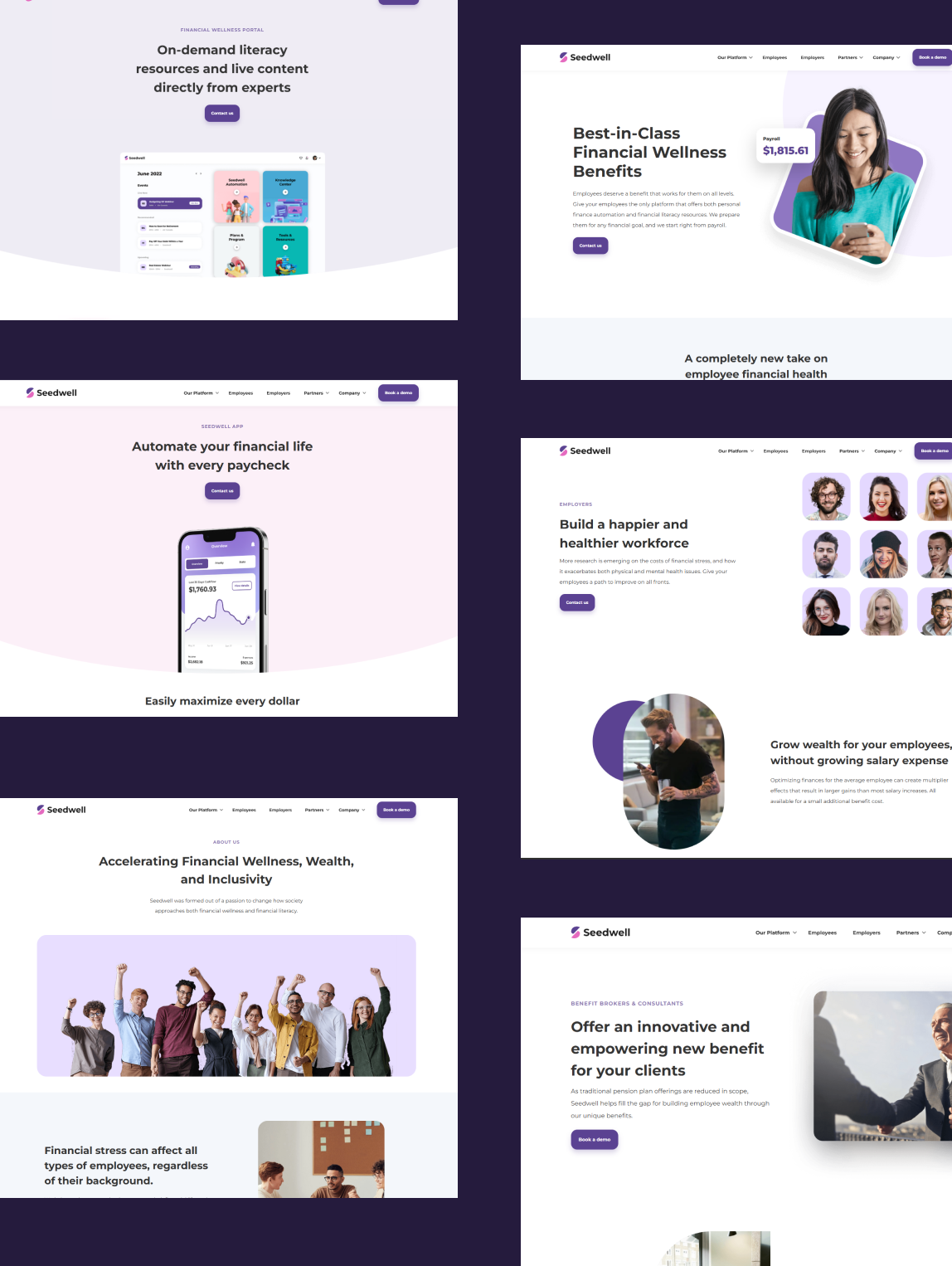
Seedwell marketing website pages for employees, employers and brokers
Website — the public face of the company.
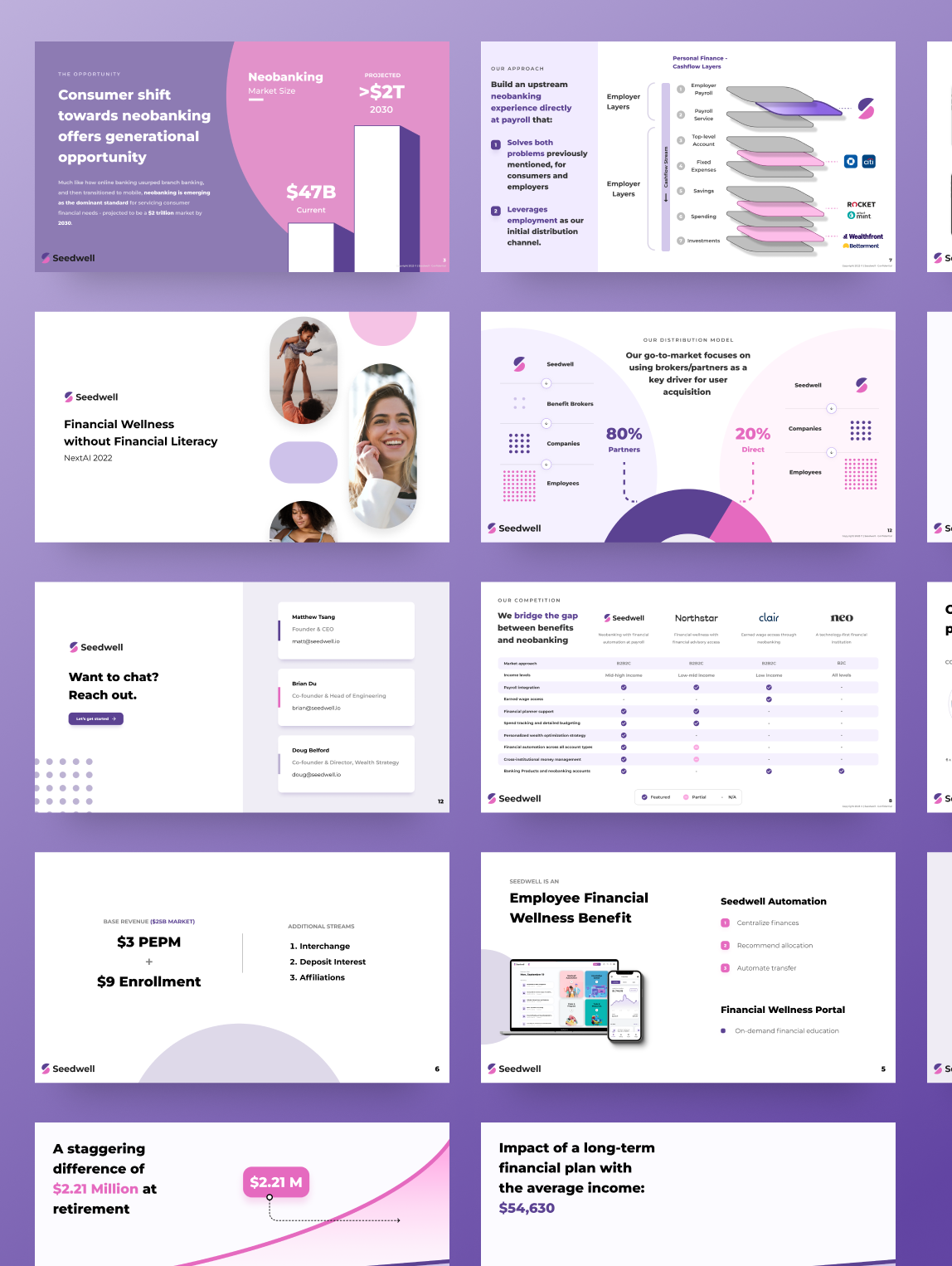
Seedwell investor and sales deck pages
Decks & collateral — investor, sales and partner-facing material.
Design system

One system across three product surfaces

The Seedwell member app, employer portal and internal tools shared a common component system and front-end architecture. For a small team, reuse was essential: it kept the experience consistent, reduced implementation overhead and gave developers established patterns to build from.
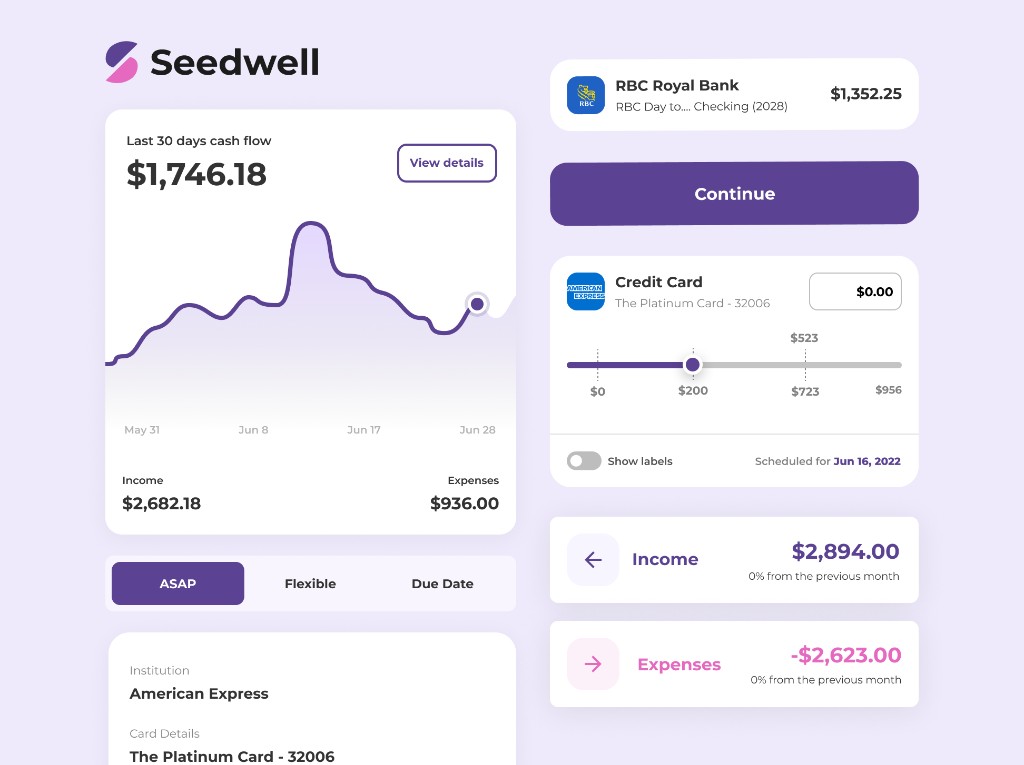
Financial components
Balances, transactions, allocation controls, goals and progress states
Forms
Onboarding, financial connections, validation and error handling
Architecture
Shared front-end patterns and reusable component foundations
Brand
Identity and interface patterns carried across product and company touchpoints
A curated view of the components the three surfaces shared.
Front-end engineering

Designing the system meant building it too

I designed and implemented most of the user-facing front end across Seedwell and LegacyAI, translating shared Figma patterns into reusable production interfaces while collaborating with backend engineering on financial data, integrations and compliance-sensitive requirements.
Desktop — the same workflow in its production implementation.
Mobile — one system, held together across breakpoints.
Leadership & traction

Building the product while growing the team

As Co-Founder & Head of Engineering I mentored up to two interns and junior-to-intermediate developers at a time, coordinated implementation priorities and sprint planning, and worked alongside backend, financial-services, sales, partnerships and compliance stakeholders.

Seedwell moved through product validation into late-stage pre-launch development, producing a relatively complete product before operations ended. The employer and benefits-partner pipeline carried 14 partner pilots and seven signed contracts. I graduated from NEXT AI as the company's technical co-founder.

Partner pilots
14
Signed contracts
7
Potential employee users
~135,000
Recognition
NEXT AI graduate
Previous case study
Amplify
Workplace wellness · 2025 — 2026

Want the full walkthrough, including the parts that aren't public?

Email me All work
© 2026 Brian Du. All rights reserved.
Design Engineer